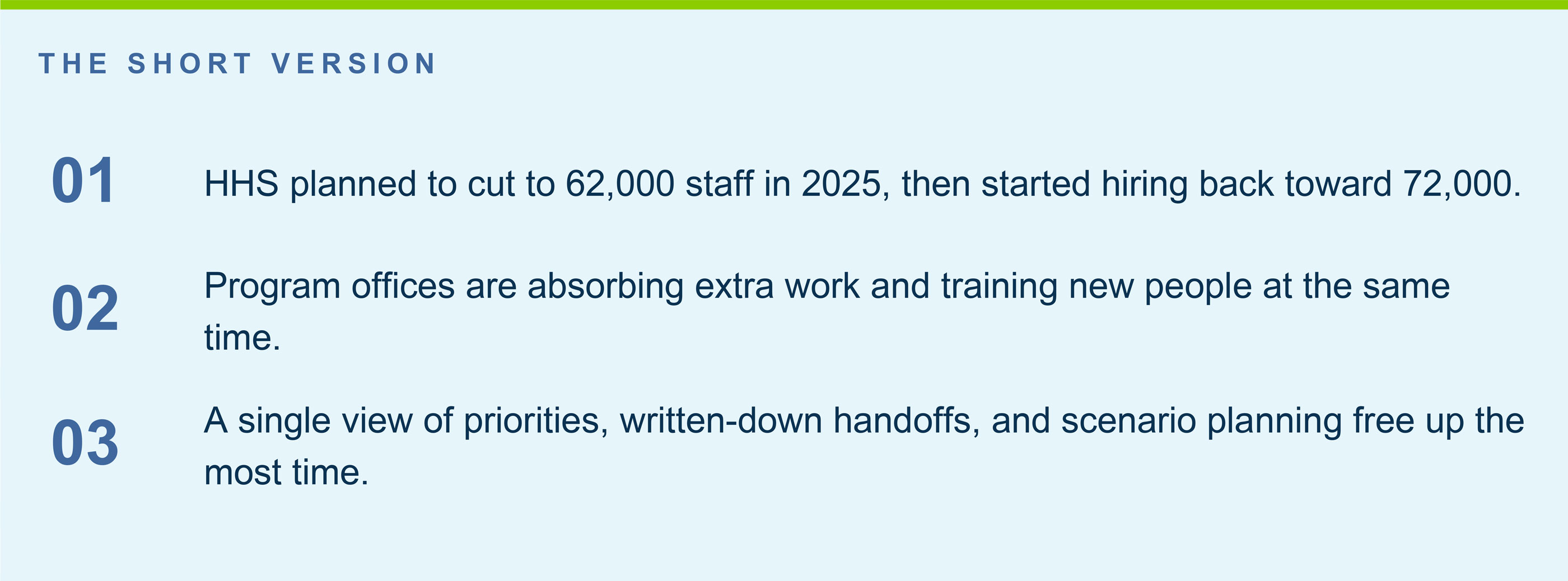
The last year and a half at HHS has been hard to plan around. In March 2025, HHS announced a restructuring that included cutting 20,000 jobs, largely from public health agencies, which would take the workforce from 82,000 to 62,000 and consolidate its 28 divisions into 15. The department has since started hiring again. This spring, Secretary Kennedy told House appropriators that HHS now has a headcount of 72,000 and plans to hire 12,000 new staff.

For a program office, that means two pressures at once. The people who stayed picked up work from colleagues who left, and now they're also onboarding new hires who have never worked on those programs.
Ask a division director how their week actually goes and a lot of it is spent assembling information. Someone pulls numbers from three spreadsheets. Someone else emails a contracting officer for a status update. A briefing gets built on Tuesday for a Thursday meeting and is already a little out of date when leadership reads it.
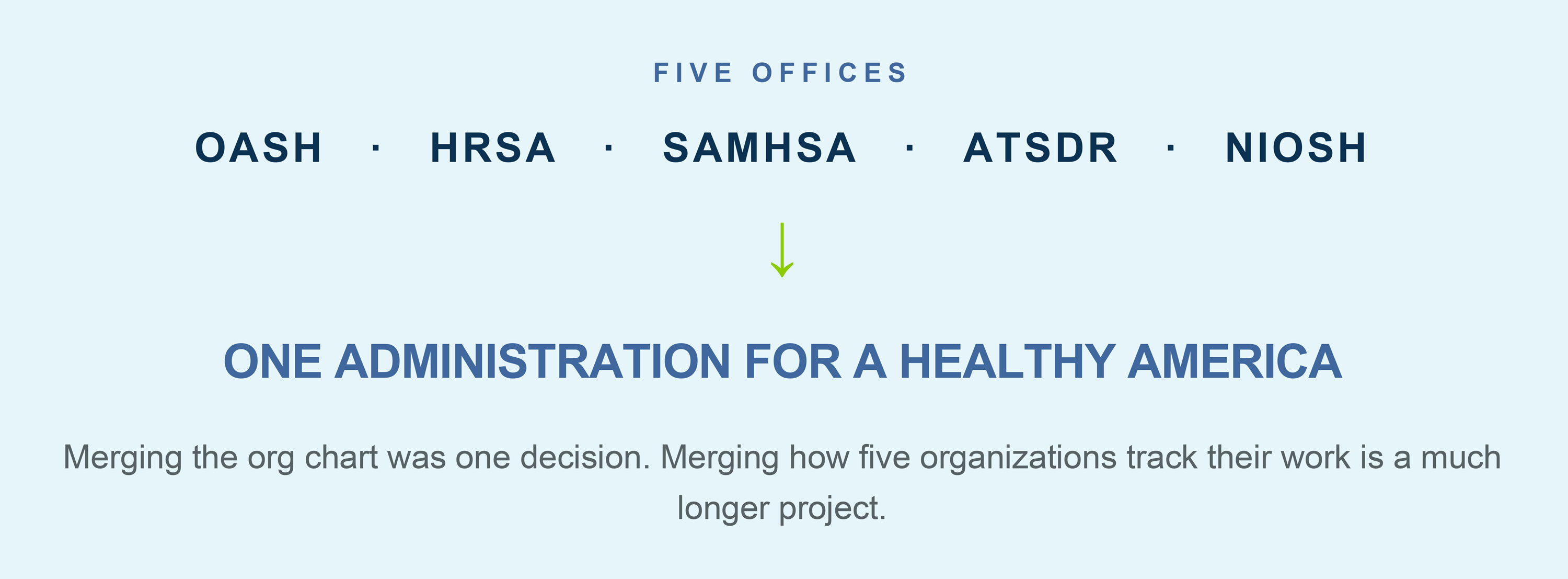
The reorganization made this harder in places. The new Administration for a Healthy America combines five offices, and each came with its own reporting habits, systems, and definitions of "on track."
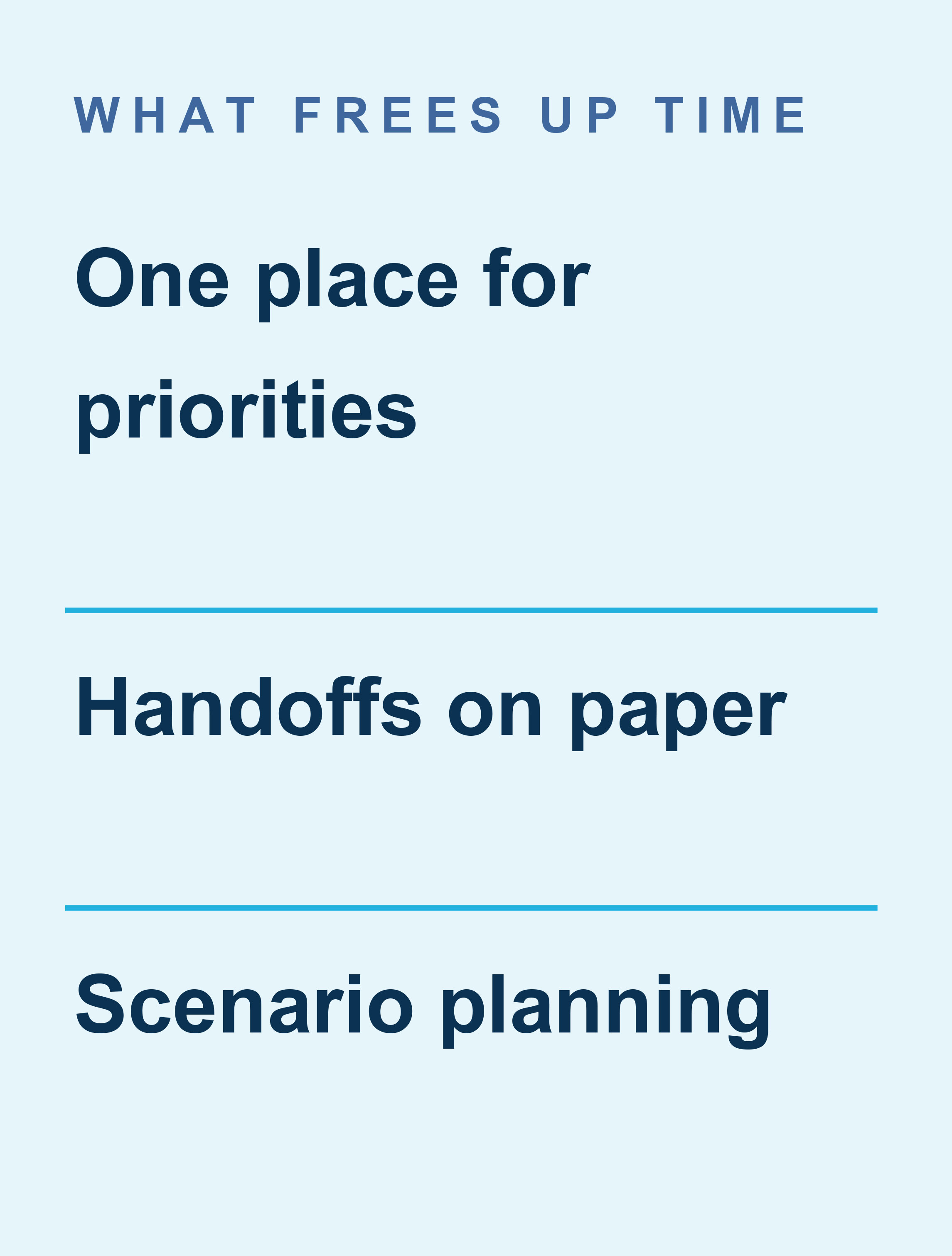
The fixes that make the biggest difference tend to be unglamorous. Leaders need one place where priorities, deadlines, and program performance live, updated from the source systems instead of retyped by staff. When data refreshes on its own, analysts can spend their time on the questions that come up in the data.
Handoffs matter more than they used to. When an experienced program manager leaves, a lot of what they knew was never written down. Documenting decisions and keeping a visible record of who owns what gives new hires something to learn from besides a hallway conversation.
Staffing decisions also get better with scenario planning.

Most offices answer those questions from experience and instinct. Having the numbers in front of you makes the conversation with leadership a lot shorter.
HumanTouch built NavigatorAI LEAD for this kind of environment. It was originally developed to help incoming executives get their hands around their portfolios, and it now covers performance monitoring, workforce planning, predictive analytics, and "what-if" scenario modeling. It is FedRAMP High Authorized, which matters for agencies handling sensitive health and personnel data.

A tool won't replace the people HHS lost. It can give the people who are there a clearer view of their work and take some of the manual reporting off their plates.
Sources: HHS restructuring fact sheet (March 2025); Federal News Network reporting on HHS headcount and hiring (April2026).

CMMI/DEV-3;
ISO 9001:2015;
ISO 20000-1:2018;
ISO 27001:2022 certified
CAGE CODE: 1XS43
UEID: YXWBLMDJX2E6